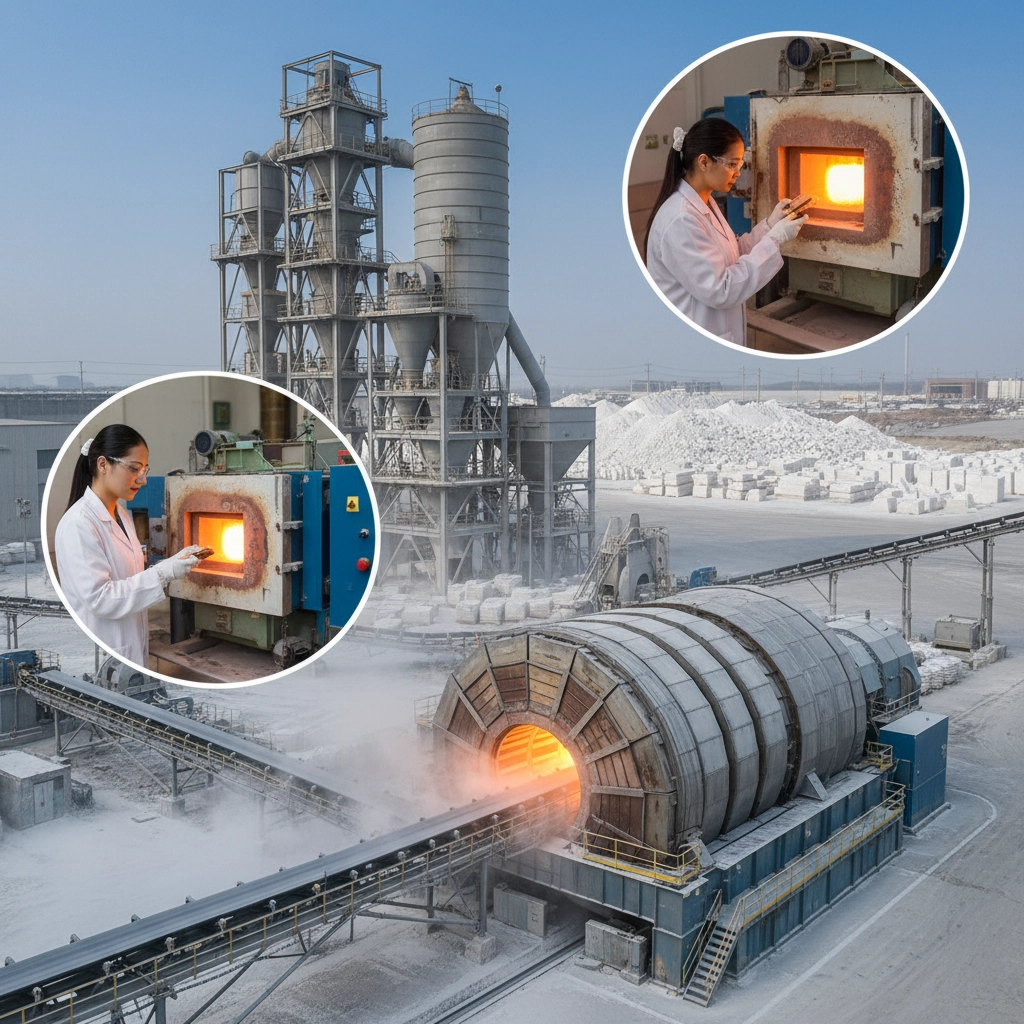
Selecting a reliable silica sand factory involves more than just comparing price lists; it requires a deep understanding of mineral purity and particle distribution. In the industrial powders sector, the difference between 95% and 99% purity can determine the structural integrity of a glass batch or the filtration efficiency of a water treatment system.
The global demand for functional non-metallic minerals is shifting toward higher precision and eco-friendly processing. Modern buyers are no longer looking for raw commodities but for processed materials that meet strict industrial grades and sustainability standards, particularly in the production of specialized silicon dioxide derivatives.
Whether you are sourcing for large-scale construction or precision industrial fillers, evaluating the technical capabilities of a silica sand factory is the first step toward quality assurance. This guide explores the critical parameters of mineral processing and how to identify a supplier that aligns with modern industrial requirements.


At its core, the operation of a professional mineral facility focuses on the transformation of raw ores into standardized powders. This involves a sequence of crushing, grinding, and classification. The goal is to achieve a specific particle size distribution (PSD) that ensures consistent performance in end-use applications.
For a silica sand factory, the primary challenge is the removal of impurities such as iron oxides, which can discolor glass or weaken chemical stability. This requires sophisticated washing and magnetic separation techniques to ensure the final product reaches an industrial grade purity, often exceeding 97%.
Purity in silicon dioxide is not a singular metric but a combination of chemical composition and physical cleanliness. The presence of alumina or titanium dioxide, even in trace amounts, can alter the melting point in ceramics or the refractive index in optical applications. Consequently, rigorous testing using X-ray fluorescence (XRF) is standard for high-level production.
Beyond chemistry, the physical shape of the grains—whether angular or rounded—affects how the powder packs and flows. In the context of functional fillers, a controlled grain shape reduces void spaces in composite materials, thereby increasing the mechanical strength of the finished product.
The integration of ISO9001 certified management systems ensures that these technical parameters are not just met during initial sampling but are maintained across every 25kg bag produced. This consistency is what separates a professional industrial supplier from a raw mining operation.
The modern mineral industry is facing a duality: the need for high-performance industrial materials and the imperative for environmental sustainability. This is particularly evident in the production of specialized products like colored sands used in creative arts, where non-toxic, eco-friendly materials are now a non-negotiable requirement.
The transition toward sustainable mineral processing is defined by the reduction of wastewater in the washing phase and the adoption of dust-free processing technologies to protect both the environment and the workforce.
Companies like Hebei Hezhen Industrial Co., Ltd. address this by optimizing the balance between industrial grade purity (such as their 97% purity silica options) and safe handling practices. By utilizing eco-conscious materials in products like No Dust Sand, manufacturers demonstrate that artistic creativity and environmental responsibility can coexist.
When auditing a production facility, operational efficiency is measured through several qualitative and quantitative indices. These include the capacity for rapid response to market shifts, the ability to customize packaging for global logistics, and the depth of the technical team's expertise in mineralogy.
A high-performing factory typically balances a lean production model with a robust R&D pipeline. This allows the facility to pivot from standard silicon dioxide production to specialized functional powders, such as tourmaline or mica flakes, without compromising the quality control of the primary lines.
The utility of silica sand extends far beyond basic construction. In the chemical industry, it serves as a critical substrate for catalysts. In the environmental sector, specifically in water filtration, the precise grain size determines the flow rate and the amount of suspended solids captured. This makes the selection of a factory capable of tight tolerance control essential.
Furthermore, the creative sector utilizes processed color sands for educational and artistic purposes. For instance, using non-dust, eco-friendly sands in bottle painting allows children to explore imagination safely. This transition from heavy industrial use to consumer-facing artistic materials highlights the versatility of modern mineral processing.
The global market for non-metallic minerals is moving toward specialization. We are seeing a decreased reliance on generic bulk sand and an increased demand for "functional powders"—materials engineered with specific surface areas or chemical additives to improve the properties of plastics, paints, and coatings.
This shift is driven by the growth of high-tech manufacturing in North America, Western Europe, and Southeast Asia. Suppliers who can provide a comprehensive portfolio—combining silicon dioxide with Bentonite, Kaolin, and Talc powder—are better positioned to serve as one-stop solution providers for complex industrial formulations.
The integration of vertical supply chains, where a factory controls the process from raw mineral extraction to final customized packaging (such as 25kg bags or custom sizes), is becoming the primary competitive advantage in reducing lead times and ensuring traceability.
Choosing between different suppliers often involves a trade-off between raw cost and technical reliability. A low-cost provider may offer bulk materials, but the risk of inconsistent purity can lead to significant losses in a production line, such as failed glass batches or clogged filtration systems.
A robust evaluation framework focuses on the supplier's technical force—specifically the ratio of engineers to staff and the availability of professional testing equipment. Facilities with a strong R&D focus can offer modified specifications to meet a buyer's exact chemical or physical requirements.
Ultimately, the most sustainable partnership is found with a factory that provides comprehensive quality assurance, flexible MOQ (Minimum Order Quantity) starting from 1kg for testing, and a proven track record of international export logistics to ensure timely delivery.
| Evaluation Factor | Raw Commodity Supplier | Industrial Grade Factory | Specialized Mineral Partner |
|---|---|---|---|
| Purity Consistency | Variable | Standardized (97%+) | Custom Precision |
| Particle Distribution | Wide Range | Controlled Range | Exact Micron Specs |
| Environmental Certs | Minimal | ISO Standard | Full Eco-Compliance |
| Customization Ability | Low | Moderate | High (R&D Driven) |
| Lead Time Stability | Unpredictable | Scheduled | Optimized Logistics |
| MOQ Flexibility | Bulk Only | Moderate | High (1kg Sample) |
An industrial grade factory employs advanced purification, magnetic separation, and precise milling processes to ensure mineral purity (often 97% or higher) and a consistent particle size distribution. While a quarry provides raw material, a factory transforms that material into a standardized industrial powder suitable for sensitive applications like glass making or chemical fillers, backed by quality certifications like ISO9001.
Grain shape—whether angular or rounded—impacts the packing density and the mechanical bond between the filler and the binder. Angular grains generally provide better interlocking and structural strength in construction materials, whereas rounded grains may be preferred in applications requiring better flowability or specific optical properties. A professional factory can control these characteristics through the grinding process.
Yes, modern manufacturers are producing colored sands using eco-friendly, non-toxic pigments and "no dust" processing. These materials are designed to be safe for children's handle and minimize environmental impact by reducing waste. This ensures that creative activities, such as bottle painting, remain sustainable and safe for all age groups without compromising on color variety.
Key metrics to verify include the percentage of SiO2 purity, the levels of iron oxide (Fe2O3) for color neutrality, the moisture content, and the particle size analysis (often expressed as a mesh size or D50 value). Additionally, check if the product is classified as Industrial Grade and verify the packaging specifications to ensure they meet your logistics and storage requirements.
Yes, many professional suppliers now offer low MOQs, sometimes as low as 1kg, specifically for sampling and quality verification. While the per-unit cost of a sample is higher than bulk, it prevents the significant financial risk of importing tons of material that may not meet your specific technical requirements. It is a standard risk-mitigation strategy in industrial procurement.
The supply chain is moving toward "integrated mineral hubs" where companies provide a variety of complementary powders (e.g., Kaolin, Talc, and Silica) from a single source. This reduces shipping costs and simplifies quality audits. There is also a strong trend toward shorter lead times through strategic warehouse positioning near major ports like Tianjin, facilitating faster delivery to global markets.
The ability to source high-purity, consistent silica sand is a cornerstone of efficiency for any manufacturer relying on non-metallic mineral fillers. By shifting the focus from simple pricing to a comprehensive evaluation of purity, particle distribution, and environmental compliance, buyers can significantly reduce production risks and improve end-product quality.
As the industry evolves toward more functional and eco-conscious materials, partnering with a technically capable factory that prioritizes R&D and quality management is no longer optional—it is a strategic necessity for staying competitive in the global market.